Bishop Nicholas (Karpov) — Shepherd of the Russian Diaspora and Educator on British Soil
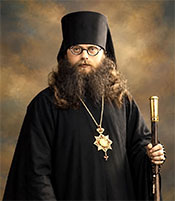 In the chronicles of the Russian Orthodox Church Outside of Russia, there are many names of shepherds whose lives became a testament to loyalty to Christ, to their ecclesiastical calling, and to their homeland. Among them is Bishop Nicholas (Karpov) — a dedicated servant of the Russian diaspora, who was entrusted with bringing the light of Orthodox faith to distant British soil. In the years when the revolutionary storm drove thousands of Russians from their native lands, he did not abandon his service but continued his pastoral work among compatriots who found themselves far from their home churches and sacred places. In the chronicles of the Russian Orthodox Church Outside of Russia, there are many names of shepherds whose lives became a testament to loyalty to Christ, to their ecclesiastical calling, and to their homeland. Among them is Bishop Nicholas (Karpov) — a dedicated servant of the Russian diaspora, who was entrusted with bringing the light of Orthodox faith to distant British soil. In the years when the revolutionary storm drove thousands of Russians from their native lands, he did not abandon his service but continued his pastoral work among compatriots who found themselves far from their home churches and sacred places.
As the first Russian Orthodox bishop with the title "of London" in modern times, Bishop Nicholas dedicated himself to organizing church life in England, spiritually educating young people, and preserving Orthodox traditions among the emigration. His pastoral service was short, but it left a noticeable mark on the history of the Russian Orthodox Church Abroad. His life reflected the tragic era of exile, but at the same time — the unbreakable strength of faith, which helps a person stay true to their calling even far from their homeland.
The future archpastor, known in the secular world as Ivan Ilyich Karpov, was born on October 13 (25), 1891, in Siberia, into a devout Old Believer family. According to a preserved tradition, his grandmother, fearing for the life of the newborn, baptized him herself without a priest, and then vowed that her grandson would grow up as an Orthodox Christian. This vow came true: Ivan chose the path of church service, to which he remained faithful until his death.
In 1913, he graduated from the Tobolsk Theological Seminary and entered the Moscow Theological Academy. There, on November 16 of the same year, the rector of the academy, Bishop Feodor (Pozdeevsky) of Volokolamsk, who later became a holy martyr, performed his monastic tonsure. The young monk was given the name Nikolai, after St. Nicholas, Archbishop of Myra in Lycia, a great servant of God, long especially revered by the Russian Orthodox people.
In 1915, Father Nikolai graduated from the Moscow Theological Academy with a degree in theology. He was assigned to teaching positions in theological schools and also became a preacher at the monastery in Oboyan in the Kursk diocese. In 1916, he had the chance to take part in the celebrations for the canonization of St John, Metropolitan of Tobolsk, whose memory he would later honor particularly highly.
Revolutionary upheavals and persecutions of the Church put an end to the old way of life. Around 1919, Father Nikolai, most likely together with other members of the Oboyan Monastery, left Russia. This happened at a time when Bishop Theophan (Gavrilov) of Kursk and Oboyan was taking the miraculous Kursk-Root Icon of the Mother of God out of the country, saving the shrine from desecration. This marked the beginning of a long journey for Archimandrite Nikolai, who was destined to continue his pastoral and educational work among Russian exiles.
After arriving in the Kingdom of Serbs, Croats, and Slovenes, Father Nikolai was ordained as a priest and assigned to serve in Serbian parishes. Later, he was elevated to the rank of archimandrite and taught at the Serbian Orthodox Theological Seminary in Bitola, Macedonia. There, he earned deep respect and affection from both students and faculty. Among his contemporaries and colleagues were individuals who were later glorified by the Orthodox Church as saints: Saint Nicholas, Bishop of Ohrid, Saint John, Archbishop of Shanghai and San Francisco, the miracle-worker, and Venerable Justin (Popovich). His interaction with these outstanding ascetics took place at a time when the Russian ecclesiastical emigration and the brotherly Orthodox peoples were striving to preserve the faith, spiritual traditions, and fidelity to the holy fathers’ teachings in the midst of difficult historical circumstances.
In 1928, Archimandrite Nikolai was appointed the rector of the Assumption parish of the Russian Orthodox Church Abroad in London. The Russian Orthodox community in the British capital had already existed for several years, but its life was complicated by internal disagreements. The new rector managed to win people over with his deep piety, pastoral wisdom, kindness, and sincere care for his flock. The services he conducted with special reverence attracted not only Russian Orthodox emigrants but also members of other faiths. The Easter services, in particular, became especially memorable, as the celebration of Christ's Resurrection brought people together in shared joy over the triumph of Life over death.
Soon Father Nikolai was chosen for episcopal service. On June 30, 1929, his episcopal consecration as Bishop of London, vicar of the Western European Diocese of the Russian Orthodox Church Abroad, took place in London. This event was of exceptional importance for Orthodox life in the United Kingdom: after the Great Schism of the 11th century, London once again became the place of an Orthodox bishop's consecration with the title of Bishop of London.
The celebration brought together outstanding representatives of the Russian émigré clergy. The ordination was attended by the First Hierarch of the Russian Orthodox Church Abroad, Metropolitan Anthony (Khrapovitsky) of Kiev and Galicia; Archbishop Seraphim (Lukyanov) of Paris and Western Europe; Archbishop Theophan (Gavrilov) of Kursk and Oboyan; and Bishop Tikhon (Lyashenko) of Berlin and Germany. Clergy from various centers of the Russian diaspora also took part in the service. The presence of such a large gathering of bishops highlighted the special significance of this new ministry for the Russian Church Abroad.
Among the honored guests was Grand Duchess Xenia Alexandrovna, sister of Emperor Nicholas II, who lived in England in exile. The presence of the Kursk-Roota Icon of the Mother of God, brought from Serbia by Archbishop Theophan, gave the celebration special spiritual significance. This miraculous shrine, which became a symbol for Russian exiles of heavenly protection and an unbreakable connection to their abandoned homeland, accompanied the most important events in the life of the Russian Orthodox Church Abroad. In London, not only Orthodox believers but many others also prayed before it, sharing in the joy of this historic event.
Metropolitan Anthony (Khrapovitsky), handing the newly appointed bishop a staff, urged him to combine faithfulness to Orthodox tradition with devoted service to the Russian people and the preaching of the Christian faith among the English. These words set the main direction for Bishop Nicholas’ future work: to be a shepherd to the Russian flock while also witnessing to Orthodoxy in a country where the Orthodox tradition was still little known.
After his consecration, a parish school was established at the bishop’s residence, which was referred to by the Russian word podvorye. Bishop Nicholas personally taught the children the Law of God and catechism, aiming to pass on the foundations of the Orthodox faith and a love for church life to the younger generation. He was assisted by monks from the Serbian Miljkovо Monastery: Hieromonks Zosima and Kallist, and Monk Vladimir. Despite the challenging circumstances of emigrant life and limited resources, the bishop took care to maintain the liturgical life, the spiritual upbringing of the children, and the unity of the Russian community.
Bishop Nicholas pastoral service in England lasted little more than three years. In August 1932, he arrived in Belgrade to participate in the sessions of the Council of Bishops of the Russian Orthodox Church Outside Russia. During his stay in the Serbian capital, the bishop fell seriously ill. Due to an attack of appendicitis and untimely medical care, his earthly life ended on the night of October 11, 1932. He was only forty-one years old. According to tradition, the bishop's last words were, "Place a candle in my hand, I am going into the other world." With a lit candle in his hand, he stood before the Lord, to whom he had dedicated his life and service.
The funeral service for the late archpastor took place at the Iversk Chapel in the New Cemetery of Belgrade. The memorial service was conducted by Metropolitan Anthony (Khrapovitsky), Archbishop Feofan (Gavrilov) of Kursk and Oboyan, and Archbishop Germogen (Maksimov). They bid farewell to their brother in deep sorrow, valuing in him not only a zealous bishop but also a person of sincere piety and a kind heart. Bishop Nikolai was buried by the wall of the Iversk Chapel, under the icon of his heavenly patron — Saint Nicholas the Wonderworker.
Bishop Nicholas' life was short, but his work left a noticeable mark on the history of the Russian Orthodox diaspora. A Siberian by birth, educated at the Tobolsk Theological School and the Moscow Theological Academy, he went through revolutionary upheaval and exile to become a pastor and missionary in distant England. His ministry combined faithfulness to church tradition, love for the Russian people, care for children, and a desire to witness Christ to people from a different cultural background. The memory of Bishop Nikolai preserves the image of a shepherd who, even far from his homeland, never abandoned his calling and worked for the Church of Christ until his last day.
Hieromonk Roman (Kiselev)
|